Why More Adults Over 40 Are Taking Magnesium Glycinate Before Bed
It isn't a sedative and it doesn't promise miracles. But this everyday mineral, in one specific form, has quietly become part of a lot of evening routines. Here's what the research actually says, and how to choose one worth buying.

If you're over 40, there's a decent chance your evenings look something like this: you're tired, but you're not exactly relaxed. You lie down and your mind keeps going. You wake up at 3 a.m. for no reason. In the morning you feel like you slept, technically, but not well.
Most people assume this is just what getting older feels like. And some of it is. But nutrition researchers have spent the last decade looking at a much more mundane contributor: how much magnesium we actually get from food, and what happens to sleep and stress when we don't get enough.
The mineral most of us are short on
Magnesium is involved in more than 300 enzyme reactions in the body. It helps regulate muscle and nerve function, blood sugar, blood pressure, and the production of energy and protein. It also plays a role in how the nervous system winds down at the end of the day.
The catch is that a large share of American adults don't hit the recommended intake through diet. According to the National Institutes of Health Office of Dietary Supplements, dietary surveys consistently show that many people in the U.S. consume less magnesium than recommended, and older adults tend to have lower intakes and lower absorption than younger adults.
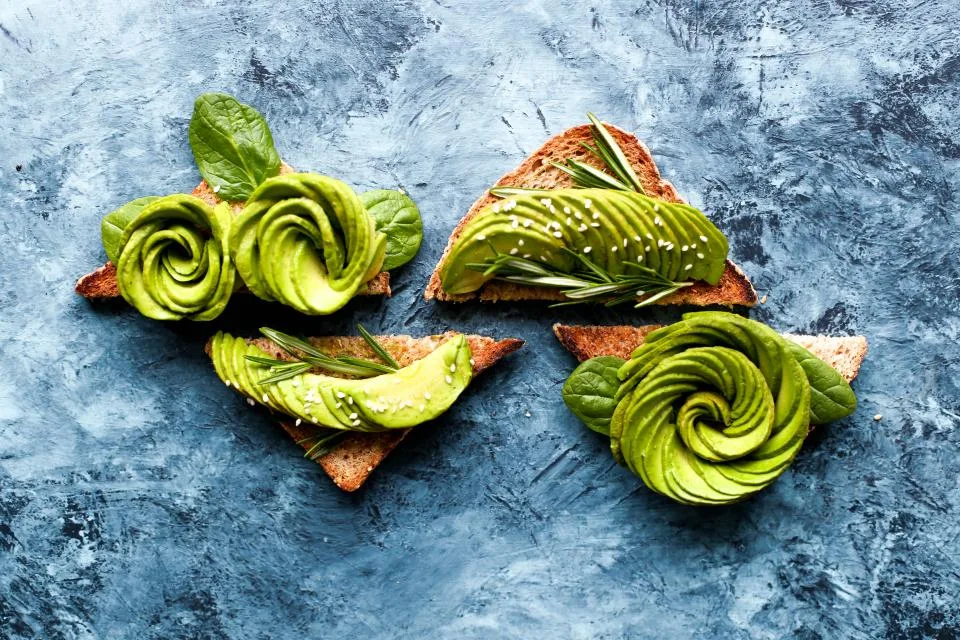
Magnesium-rich foods are the obvious first step: pumpkin seeds, almonds, spinach, black beans, avocado, and, yes, dark chocolate. But for people whose diets don't include much of those, a supplement is a practical way to close the gap.

What the research says about sleep and stress
Let's be clear about what magnesium is not: it is not a sleeping pill, and it will not treat a sleep disorder. What the evidence does suggest is more modest and, for a lot of people, more useful.
- A double-blind, placebo-controlled trial published in the Journal of Research in Medical Sciences found that older adults who took magnesium for eight weeks reported improvements in sleep efficiency, sleep time, and how long it took them to fall asleep, compared with placebo.1
- A 2021 systematic review and meta-analysis in BMC Complementary Medicine and Therapies pooled the available trials in older adults and concluded that magnesium supplementation was associated with a modest reduction in the time it took to fall asleep, while noting that the overall quality of evidence is still limited.2
- A 2017 systematic review in Nutrients looked at magnesium and subjective measures of stress and anxiety and found a suggestive benefit in people who were mildly anxious or under stress, again calling for larger, well-designed trials.3
Read those carefully. The honest summary is: promising, consistent in direction, and not yet definitive. That's a very different thing from "cures insomnia," and any product page telling you otherwise is overselling.
Why the form of magnesium matters
Walk down a supplement aisle and you'll see magnesium oxide, citrate, glycinate, threonate, malate, and more. They're not interchangeable.
Magnesium oxide is cheap and common, but it's poorly absorbed and is best known for its laxative effect. Magnesium citrate absorbs better but can still loosen stools at higher doses. Magnesium glycinate (also called bisglycinate) binds the mineral to glycine, an amino acid the body uses in its own calming pathways. It's generally considered one of the gentlest forms on the stomach, which is exactly why it's the one most often suggested for evening use.
In practical terms: if you tried magnesium before and it upset your stomach, there's a good chance it was the wrong form.

How to choose one that's actually worth buying
Supplements are lightly regulated in the United States, and label accuracy varies more than most shoppers realize. Before we recommend anything, we look for four things:
- Third-party certification. Not just "third-party tested" on the label, but a named, independent certifier such as NSF International that verifies what's in the bottle matches what's on the label.
- A clear elemental dose. "400 mg magnesium glycinate" is not the same as 400 mg of magnesium. A trustworthy label states the elemental amount.
- A short ingredient list. No proprietary blends, no unnecessary fillers or dyes.
- A real company behind it. A physical address, a phone number, a refund policy, and a track record.
Our pick: Double Wood Supplements Magnesium Glycinate
After comparing a dozen glycinate products on those criteria, the one we keep coming back to is from Double Wood Supplements, a Pennsylvania-based company founded in 2013 by twin brothers Reese and Evan Wood. They're not a household name, and that's part of why we like them: they sell mostly single-ingredient products, publish Certificates of Analysis, and don't spend their money on celebrity endorsements.
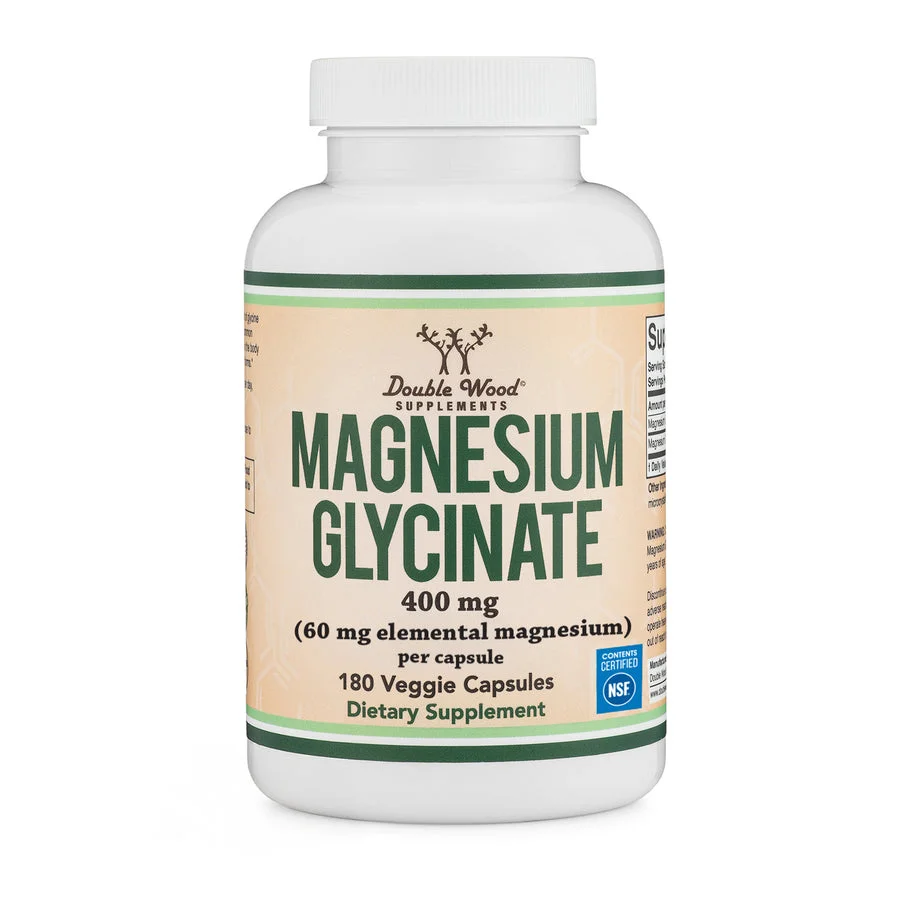
Magnesium Glycinate 400 mg, 180 Capsules
Double Wood Supplements · Sharon Hill, Pennsylvania
$19.95 per bottle · 6-month supply at 1 capsule/day
- NSF International certified for label accuracy and contaminants
- Manufactured in an FDA-registered, cGMP-certified U.S. facility
- Vegan, non-GMO, gluten-free, soy-free
- 30-day money-back guarantee from the brand
What's in it
One capsule provides 400 mg of magnesium glycinate, which delivers 60 mg of elemental magnesium (14% of the Daily Value). That's a deliberately conservative dose: it lets you start with one capsule and adjust with your doctor's guidance, rather than starting high and dealing with the digestive side effects that put so many people off magnesium in the first place.
Supplement Facts
| Serving size | 1 capsule |
| Servings per container | 180 |
| Magnesium (as magnesium glycinate) | 60 mg · 14% DV |
| Magnesium glycinate | 400 mg |
Other ingredients: Hypromellose (capsule), rice flour, microcrystalline cellulose, vegetable stearate.
Suggested use: Take 1 capsule per day with or without food.
What we liked
- The certification is real. NSF is one of the few certifiers that audits facilities annually and tests finished products for contaminants. Most supplements at this price point don't carry it.
- It's gentle. Glycinate is already the easy-on-the-stomach form, and the modest per-capsule dose makes it easier to find the amount that suits you.
- The value is hard to argue with. At $19.95 for 180 capsules, a single bottle covers six months at one capsule a day. Multi-packs bring the per-bottle price down further.
- You can actually reach the company. A U.S. address, customer service, and a straightforward 30-day refund policy.
What we'd flag
- Sixty milligrams of elemental magnesium per capsule is on the lower end. If your doctor suggests a higher intake, you'll be taking more than one capsule, which shortens the six-month math.
- Like any magnesium supplement, it's not for everyone. People with kidney problems, or who take certain antibiotics, diuretics, or heart medications, should talk to a healthcare professional before starting.
- It won't fix a sleep problem caused by something else: sleep apnea, pain, caffeine at 4 p.m., or a phone in bed. It's a nutritional gap-filler, not a cure.
The bottom line
Magnesium glycinate isn't a trend and it isn't a miracle. It's an essential mineral most of us under-consume, in the form that's easiest to take every night, backed by evidence that is encouraging if not yet conclusive. If you're going to try it, buy one that's independently certified, start low, give it a month, and loop in your doctor if you take any medication.
Double Wood's version checks every box we care about at a price that doesn't require a subscription or a "limited-time" anything. That's about as good as a recommendation gets in this category.
Check availability at DoubleWoodSupplements.comOpens the brand's official store in a new tab. GabMM Wellness may earn a commission.
Frequently asked questions
Is magnesium glycinate safe to take every day?
For most healthy adults, magnesium from supplements within the recommended upper limit (350 mg of elemental magnesium per day from supplements, per the NIH) is considered safe. People with kidney disease or who take certain medications should check with a healthcare professional first.
When should I take it?
There's no strong evidence that timing changes the effect. Many people prefer the evening because glycine is associated with relaxation, but taking it whenever you'll remember consistently is what matters.
How long until I notice anything?
Magnesium isn't a fast-acting substance. In the clinical trials cited above, participants were assessed after eight weeks. Give it at least a few weeks.
Will it cause digestive upset?
Glycinate is the form least associated with loose stools. Starting with one capsule and increasing only if advised keeps this risk low.
Does GabMM Wellness get paid if I buy?
Yes. If you purchase through a link on this page, we may receive a commission from the retailer at no additional cost to you. This doesn't change the price you pay, and we don't accept payment to alter our reviews. See our disclosure.
References
- Abbasi B, et al. The effect of magnesium supplementation on primary insomnia in elderly: a double-blind placebo-controlled clinical trial. J Res Med Sci. 2012;17(12):1161-1169. pubmed.ncbi.nlm.nih.gov/23853635
- Mah J, Pitre T. Oral magnesium supplementation for insomnia in older adults: a systematic review & meta-analysis. BMC Complement Med Ther. 2021;21(1):125. pubmed.ncbi.nlm.nih.gov/33865376
- Boyle NB, Lawton C, Dye L. The effects of magnesium supplementation on subjective anxiety and stress: a systematic review. Nutrients. 2017;9(5):429. pubmed.ncbi.nlm.nih.gov/28445426
- National Institutes of Health, Office of Dietary Supplements. Magnesium: Fact Sheet for Health Professionals. ods.od.nih.gov
Advertising disclosure. This page is an advertorial published by GAB M M, LLC (GabMM Wellness). We may receive compensation when you click links to, or purchase products from, retailers featured on this page. Compensation does not influence the price you pay.
Health disclaimer. These statements have not been evaluated by the Food and Drug Administration. This product is not intended to diagnose, treat, cure, or prevent any disease. The content on this page is for general informational purposes only and does not constitute medical advice. Individual results vary. Always consult a qualified healthcare professional before starting any supplement, especially if you are pregnant, nursing, have a medical condition, or take medication.
Product information, pricing, and availability were verified on September 18, 2026 from the retailer's website and are subject to change. Double Wood Supplements is a registered trademark of its owner; GabMM Wellness is not affiliated with or endorsed by the brand beyond the affiliate relationship described above.